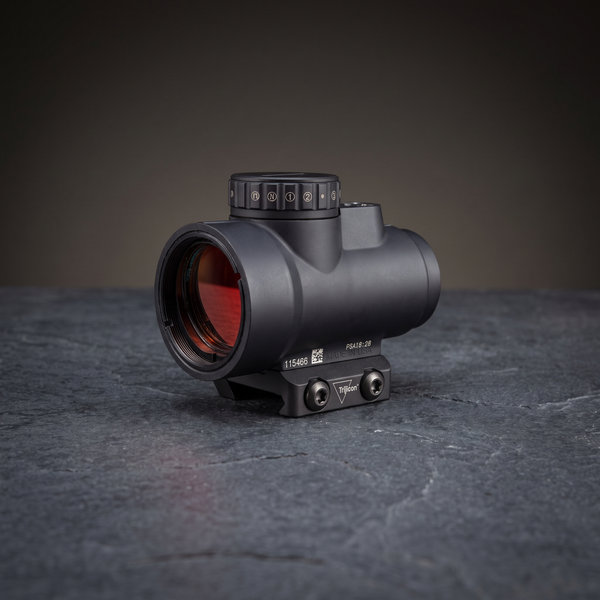
Fitting a red dot is straightforward if you do it methodically. This step-by-step guide walks you through mounting and zeroing a red dot sight on a rifle or pistol — the right way, so it holds zero and stays put.
What you'll need
- Your red dot sight and the correct mount or adapter plate for your platform
- A quality torque driver or wrench with the right bits
- Medium-strength (blue) thread locker
- Targets, a stable rest and ammunition for live zeroing
Step 1: Choose the right mount and height
On a rifle, pick a mount height that suits your platform — for an AR-pattern rifle, a lower-1/3 co-witness or 1.93in mount gives a comfortable, heads-up cheek weld. On a pistol, make sure the optic matches your slide's footprint (or use the correct adapter plate). Browse red dot sight mounts for the right fit, and compare the exact heights in our mount height chart.
Step 2: Mount the optic
Clean the mating surfaces, apply a small amount of thread locker to the screws, and seat the optic. Tighten the screws gradually in a cross or alternating pattern to the manufacturer's specified torque (printed in the manual — often around 15–18 in-lb for optic screws, and higher for mount-to-rail). Don't overtighten — correct torque, not brute force, is what holds zero.
Step 3: Let the thread locker cure
Give the thread locker time to set (check the product instructions — often a few hours) before heavy use, so the screws stay put under recoil.
Step 4: Bore-sight first
Before firing, get on paper the easy way. On a rifle you can remove the bolt and look down the bore at a target, then adjust the dot to roughly match. A laser bore-sighter does the same job faster. This saves ammunition at the live-fire stage.
Step 5: Live zero
Set up on a stable rest at your chosen zero distance. British ranges are laid out in metres, so 25 m is the usual practical starting point for a rifle red dot, and 10–25 m for a pistol optic. Not sure which distance suits you? Compare 25 m, 36-yard and 50/200 zeros — with the metric conversions — in our zero distance chart. Fire a group of 3–5 rounds, then adjust the dot toward the group using the windage and elevation turrets. Each click moves the point of impact a set amount (commonly 1 MOA — roughly 29 mm at 100 m, or about 7 mm at 25 m). Repeat until your group sits on the bullseye.
Step 6: Confirm and record
Fire a final confirmation group. Once happy, note your zero distance — and note whether it was metres or yards, because they are not the same thing — and your settings. Re-check screw tightness after the first range session; recoil can reveal a screw that wasn't fully seated.
Tips for keeping zero
- Always use thread locker and correct torque — loose screws and incorrect torque are the two biggest causes of a lost zero.
- Use a quality mount; a cheap mount on an expensive optic is a false economy.
- Match the optic footprint exactly on pistols — see our RMR vs RMSc footprint guide and, for Glock owners, the Glock MOS fitting guide.
Need the gear? Shop red dot sight mounts and red dot sights, or browse optics for your platform in rifle dot sights and pistol dot sights.
Frequently asked questions
What distance should I zero a red dot?
A 25 m zero is a popular, practical choice on British ranges for a rifle red dot; pistol optics are commonly zeroed at 10–25 m. Choose based on your typical shooting distance.
Do I need thread locker?
Yes — medium-strength (blue) thread locker plus correct torque is the key to a red dot that holds zero under recoil.
How much does each click adjust?
Most red dots adjust in 1 MOA clicks, which is about 29 mm at 100 m (1 inch at 100 yards). Check your manual, as some use 0.5 MOA.